Video Brochure Paper Guide: Balancing Print Quality, Strength and Sustainability
Choosing Paper by Marketing Application
Product Launches
For a product launch, image clarity and brand consistency are usually priorities. Smooth-coated paper with matte or soft-touch lamination can provide a polished appearance while keeping photography and technical graphics clear.
Corporate Gifting
Corporate gift projects often benefit from tactile materials, restrained colors, foil stamping, or embossed branding. The objective is usually to communicate quality without making the design feel overly promotional.
Direct-Mail Video Campaigns
A video mailer needs to balance impact with shipping efficiency. Excessively heavy material can increase logistics costs, while insufficient board strength may lead to damage.
Material testing should therefore include both visual approval and transport testing.
Trade Shows and Sales Presentations
Products intended for repeated handling need durable hinges, stable screen mounting, and surfaces that resist fingerprints and scuffing.
In these situations, durability can be more important than choosing the most decorative paper.
Hard Cover or Soft Cover?
Hard-Cover Video Brochure
A hard cover offers:
- Better structural protection
- A more premium hand feel
- Stronger support for large screens
- More room for pockets and inserts
It is commonly used for executive presentations, luxury projects, and high-value B2B campaigns.
Soft-Cover Video Card
A soft cover offers:
- Lower weight
- Easier mailing
- A slimmer profile
- Better suitability for compact campaigns
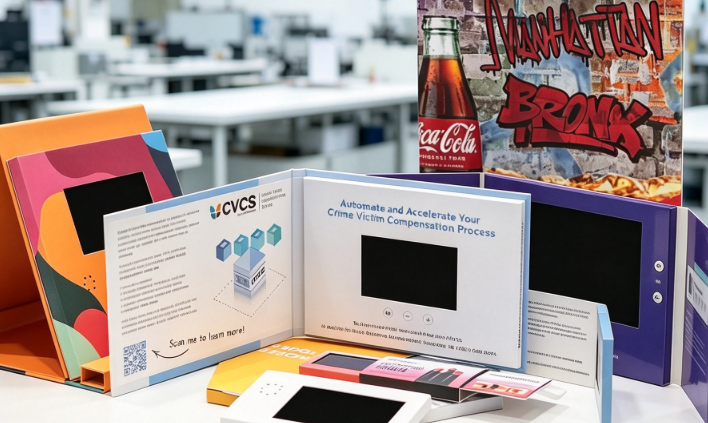
Your product specification file includes both softcover and hardcover formats, along with external gift boxes, PU covers, touch-screen versions, and screen sizes ranging from compact formats to 10-inch presentations. This variety shows why paper and board specifications should follow the final structure rather than a fixed universal formula.
Common Material Mistakes
Choosing Paper Only by Appearance
A visually attractive paper may crack after scoring or create poor adhesion after lamination.
Ignoring Grain Direction
Incorrect grain direction can cause covers to resist folding, warp, or crack along the hinge.
Using Insufficient Board Support
Large displays create concentrated weight. Without adequate support, the cover may bend around the screen opening.
Adding Too Many Finishes
Foil, spot UV, embossing, lamination, and specialty texture can all add value, but using too many processes may reduce clarity and increase production risk.
A more focused combination often produces a stronger result.
A Practical Approach to Sustainable Materials
Sustainable packaging is not only about selecting recycled-looking paper.
A more practical approach may include:
- Responsibly sourced paper
- Recycled or recyclable paper components
- Reduced material use
- Efficient structure design
- Durable construction that extends product life
- Finishes selected with end-of-life considerations in mind
Because a video brochure contains electronic components, sustainability also depends on responsible product design and clear separation of material functions.
Sample Testing Before Mass Production
Before approving production, buyers should inspect:
Print performance
Are images, skin tones, gradients, and brand colors accurate?
Structural stability
Does the cover remain flat around the screen and hinge?
Surface durability
Does the finish resist fingerprints, scratches, and transport friction?
Opening experience
Does the brochure open smoothly without excessive resistance?
Electronic fit
Are the screen, speaker, buttons, battery, and wiring securely positioned?
A physical sample remains essential because digital artwork cannot fully show texture, rigidity, weight, or folding performance.
About SHINY
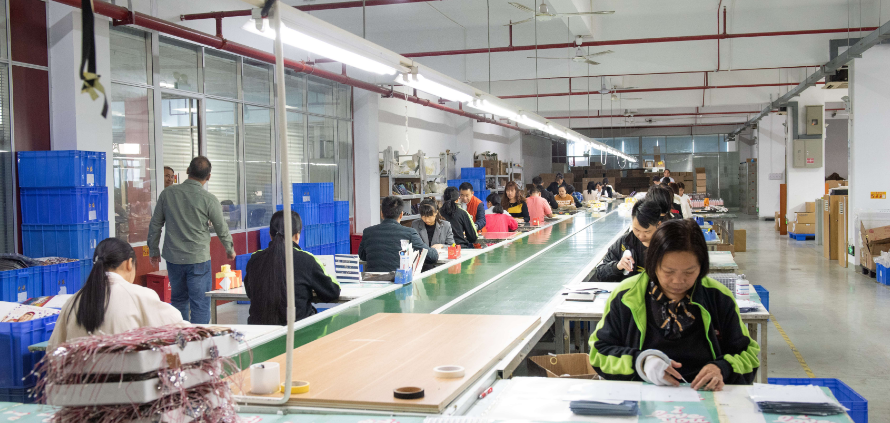
SHINY is an experienced manufacturer of video brochures, video greeting cards, video mailers, video boxes, and other customized creative products. According to its company profile, its services cover design and development, structural planning, electronic functions, printing, production, quality control, and OEM/ODM customization. Its product portfolio includes multiple video brochure structures and screen formats, allowing paper, board, finishing, and packaging to be developed around the needs of each project.